Strategic Insight Series
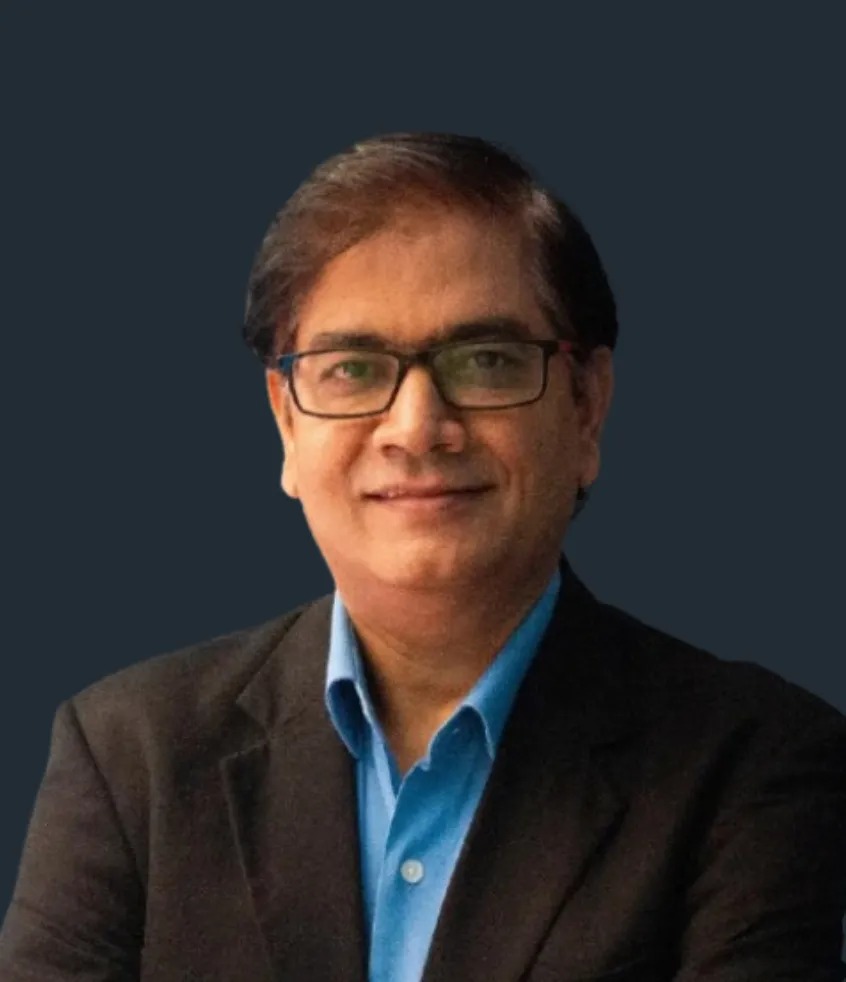
Awadhesh Kumar Jha — EV Reliability & Policy Leadership
Executive Director at GLIDA (Fortum Charge & Drive India) • Chairman of the Indian Charge Point Operators Association • 30+ years across hydropower, solar and EV charging. His north star: cleaner air through reliable energy & mobility.
EV Infrastructure & Reliability
Policy Leadership
Grid & Data Transparency
Investor Confidence
Right‑to‑Charge
1) Why this conversation matters
EV adoption hinges on reliability, data & trust — not just charger counts
With India’s cities choking on particulate matter and transport emissions making up 20–30% of urban air pollution, reforming mobility isn’t optional — it’s urgent. Public charging stations have grown from 5,100 in Dec 2022 to over 26,000 by April 2025, yet headlines mask a truth: consumers still face unreliable power, inconsistent uptime and confusing access rules.
Awadhesh Jha has spent three decades moving from hydropower to solar to EV charging. Today, as Executive Director of GLIDA and Chairman of ICPOA, he champions the boring but vital disciplines that make EV infrastructure work: power availability, uptime transparency, uniform standards and a “right‑to‑charge” for every driver. His mission is simple: make breathing easier by getting clean energy and clean mobility out of the lab and onto the street.
About Awadhesh Jha
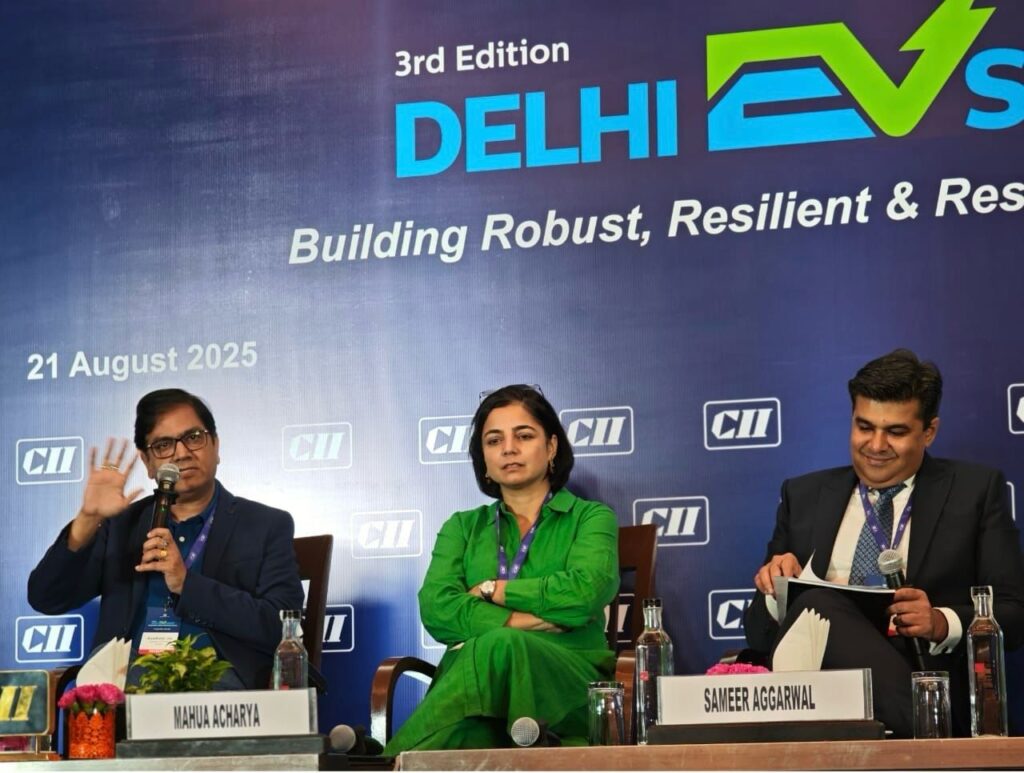
Awadhesh’s career arcs across hydropower, solar and now EV charging, each step driven by a single question: how can we cut urban air pollution through cleaner energy? He is currently Executive Director at GLIDA (Fortum’s subsidiary in India) and also serves as Chairman of the Indian Charge Point Operators Association (ICPOA) — giving him a unique view from policy rooms to charger sites. Under his leadership, GLIDA has built consumer‑grade charging stations across malls, highways and cities while pushing the industry to publish uptime data and unify definitions. As ICPOA chair, he advocates a national dashboard that shows stations, connectors, power classes, uptime and prices — so investors, planners and drivers see the same truth.
Credentials & milestones
- Executive Director, GLIDA (Fortum Charge & Drive India) — building reliable charging networks across urban and highway corridors.
- Chairman, ICPOA — coordinating CPOs, DISCOMs and city planners; promoting unified uptime & pricing dashboards.
- 30+ years in energy: from hydropower to solar to EV charging.
- Advocate for the “Right‑to‑Charge”: EV drivers shouldn’t be denied service for not having a particular app.
- Frequent speaker at EV conferences; mentor to startups and policymakers.
Quick Snapshot
Years in clean energy & EV
>30 years
Core Focus
Executive Director, GLIDA • Chairman, ICPOA
Core focus
Uptime & reliability • Grid & data transparency • Policy & investor confidence • Right‑to‑Charge
Helps with
Infrastructure rollouts, uptime metrics, feeder & load mapping, public dashboards, funding diligence, startups & policy
2) Journey & lens
From megawatts to kilowatt‑hours — a three‑decade arc
Awadhesh’s journey reads like a sequential system build: hydropower taught him about dispatchable clean energy and grid physics; solar taught him scaling dynamics and the interplay of policy & finance; EV charging places him at the messy frontline where user experience meets grid reality.
Hydropower roots
Early career in hydropower instilled respect for dispatchable clean energy, grid stability and long asset lives. He learned that reliability isn’t optional — it’s baked into infrastructure economics.
Solar scaling
As India’s solar boom began, he navigated policy‑finance interplay: translating tariffs into bankable PPA's, building large plants, and learning that execution discipline beats hype.
EV charging frontline
Today at GLIDA & ICPOA, he builds and governs public charging: uptime dashboards, feeder mapping, unified definitions, user‑friendly access and investor trust. His lens: make public charging feel like home charging.
3) Brutal truths
Gaps we often skip over
3.1 Uptime is the real bottleneck — especially on highways
Station counts are rising fast, but reliability isn’t. Uptime collapses when sites face feeder issues, transformer faults or unstable supply — especially on highways where range anxiety is acute. Malls do better because of robust supply architecture; highway nodes suffer due to patchy power and fewer redundancy layers. Counting plugs without measuring uptime and power availability is vanity.
3.2 Informational opacity hurts planning and capital
CPOs and planners lack statewide visibility into transformer capacities, spare load and electrification timelines. Today only DISCOMs know feeder headroom. Without data sharing, site selection is sub‑optimal, upgrades take too long and investors stay wary. We need a shared map of distribution assets, loads and timelines.
3.3 User literacy & safety narratives
Many consumers misunderstand battery life and safety. Misperceptions (“replace after three years” or overblown fire fears) deter adoption. Regulators sometimes amplify isolated events without context. EV safety needs credible standards and education — relative risks vs ICE and maintenance best practices.
3.4 Policy intent doesn’t equal user experience
Ambitious policies must translate into frictionless experiences: easy payments, no‑app fallback, roaming‑like access, predictable power and transparent pricing. India’s “Right‑to‑Charge” movement is still limited to home charging; it needs to cover public access and payments. Without quality of experience, adoption stalls even if subsidies exist.
4) Strategic solutions
What to solve — and what to avoid
Reliability & grid‑aware siting
- Publish 90‑day rolling uptime & utilization by site, with root‑cause tagging (power outage, connector, payment).
- Start site selection with feeder load maps and augmentation SLAs; prioritize nodes where upgrades are fastest.
- Implement highway reliability compacts: redundant supply (diesel‑free), dual‑CPO co‑location >98% uptime.
Data transparency & open access
- Build a Grid & Charge Exchange — DISCOMs publish spare capacity & timelines, city planners publish land inventories, CPOs publish demand & live uptime/prices.
- Use unified definitions: what is a public charger, fast vs slow, operational vs energized.
- Enforce contactless payments & roaming: UPI/cards and cross‑CPO access. Show real‑time prices and histories.
Safety & literacy
- Launch a national Battery & Safety Literacy Program; train RWAs, fleets and fire departments on charging habits, SoC bands, thermal management & new BIS standards.
- Promote relative risk context: EV fire incidents per 10k vehicles vs ICE.
- Communicate standards (IS 18590 & IS 18606) and the convergence around CCS Type‑2 for four wheelers; support two‑wheeler transition.
Avoid: Focusing solely on charger counts; app‑only gates and wallet traps; over‑funding OEM glamour while under‑funding infrastructure resilience.
5) EV pods & modular battery strategy
What investors should track
Awadhesh argues that long‑term capital will flow into charging only if investors focus on three metrics:
Uptime
Investors should treat >95% availability as table stakes in cities and >98% on corridors. This means auditing telemetry (OCPP status + grid logs) and rewarding operators who deliver real uptime, not announced counts.
Utilization
Publish hourly kWh dispensed, session density and occupancy by connector, not just monthly totals. Benchmark against vehicle stock and local land use to test viability.
Hardware robustness
Look beyond superficial numbers: verify connector durability, cable life, cooling systems, MTBF, and service turnaround. Align assumptions with 10–15 year asset life.
Avoid: IEA’s Global EV Outlook 2025 suggests India needs to add ~50k public charging points per year to hit 375k by 2030 — about 30% faster than 2024 additions. Schemes like PM E‑DRIVE earmark ₹2,000 crore for chargers through March 2026. But scale must come with reliability, transparency and service discipline.
6) Ground truth
What he sees on the ground
Urban vs highway reality
In malls and dense urban areas, chargers enjoy reliable power and 24×7 uptime; people charge while shopping. On highways, supply is patchier; feeder faults or outages can leave drivers stranded. The solution isn’t more boxes, but more power redundancy and contingency.
Fleet economics
Fleet adoption hinges more on vehicle supply and range than on charging reliability within cities. But as fleets move inter‑city, charger uptime becomes critical. Without 24×7 access on highways, adoption stalls.
Standardization & voluntary convergence
Awadhesh opposes forcing connector standards from above. The industry has voluntarily converged on CCS Type‑2 for four‑wheelers and will eventually do so for two‑wheelers. BIS standards (IS 18590/18606) are more important than nationality rhetoric.
7) For founders & policy makers
Trust, people & lean scale
Under‑promise, over‑deliver
Never commit what you can’t deliver. It’s better to lose an opportunity today than to damage credibility through disputes tomorrow. Transparency builds trust.
Scale people last
After raising funds, avoid the temptation to inflate headcount. Build lean operations with instrumentation and automation. Invest in a small, skilled team rather than diluting effectiveness.
Quality & integration as R&D
Not every startup needs deep tech research. If you assemble or integrate, your moat is reliability: materials, thermal management, protection circuits, firmware, EMI/EMC, OCPP compliance and serviceability.
His tip: design sites for the grid you have — plan for brownouts with storage, smart load management, dual modem connectivity and graceful degradation.
8) Vision 2040
What “success” looks like in 2040
- High‑capacity public fast charging is the norm. Most public stations are ≥120 kW and corridors approach ≥180 kW.
- On‑demand power connections with clear SLAs: setting up a 1 MW site is a 15/30/60‑day process depending on load.
- Roaming‑like access & unified transparency: drivers can tap, pay and charge at any station with one wallet; uptime and pricing data are open and reliable.
These markers signal not just scale, but maturity: a country where charging is a utility, power arrives when needed, and reliability is the norm, not the exception.